

Yes, plain, unsalted, no-onion, no-garlic bone broth is safe for most healthy cats and works well as a hydration and palatability boost. The rules that matter most: never serve seasoned store-bought broth or broth cooked with cooked bone fragments, start with a small amount and watch how your cat responds, and check with your veterinarian first if your cat has kidney disease, pancreatitis, or an active stomach bug.
TL;DR:
- Homemade, unseasoned bone broth made from raw bones provides hydration, collagen support, and can improve urinary health if given in moderation and properly strained.
- Broth should never contain onion, garlic, salt, or seasoning, as these ingredients are toxic or harmful to cats, especially when cooked bones tend to splinter.
- Start with small portions, such as one teaspoon for small cats or one to two tablespoons for larger cats, offered two to three times weekly, and adjust based on your cat’s response.
- Cats with kidney issues, pancreatitis, or protein allergies require veterinarian approval before adding broth to their diet due to mineral and fat content considerations.
- Shelf-stable alternatives like rehydrated meals exist for busy owners, offering convenient, protein-rich moisture without the need for long cooking times or strain cleaning.
Table of Contents
- Benefits of Bone Broth for Cats: Hydration, Joints, and Gut Support
- Bone Broth Safety Rules Every Cat Owner Should Know
- How to Make Bone Broth for Cats at Home
- How Much Bone Broth Should You Give Your Cat?
- When to Check With Your Vet Before Adding Bone Broth
- What Whispurr Thinks About Bone Broth vs. Ready-Made Hydration
- A Convenient Option When Broth Isn't Practical
- Sources
- FAQ
Benefits of Bone Broth for Cats: Hydration, Joints, and Gut Support
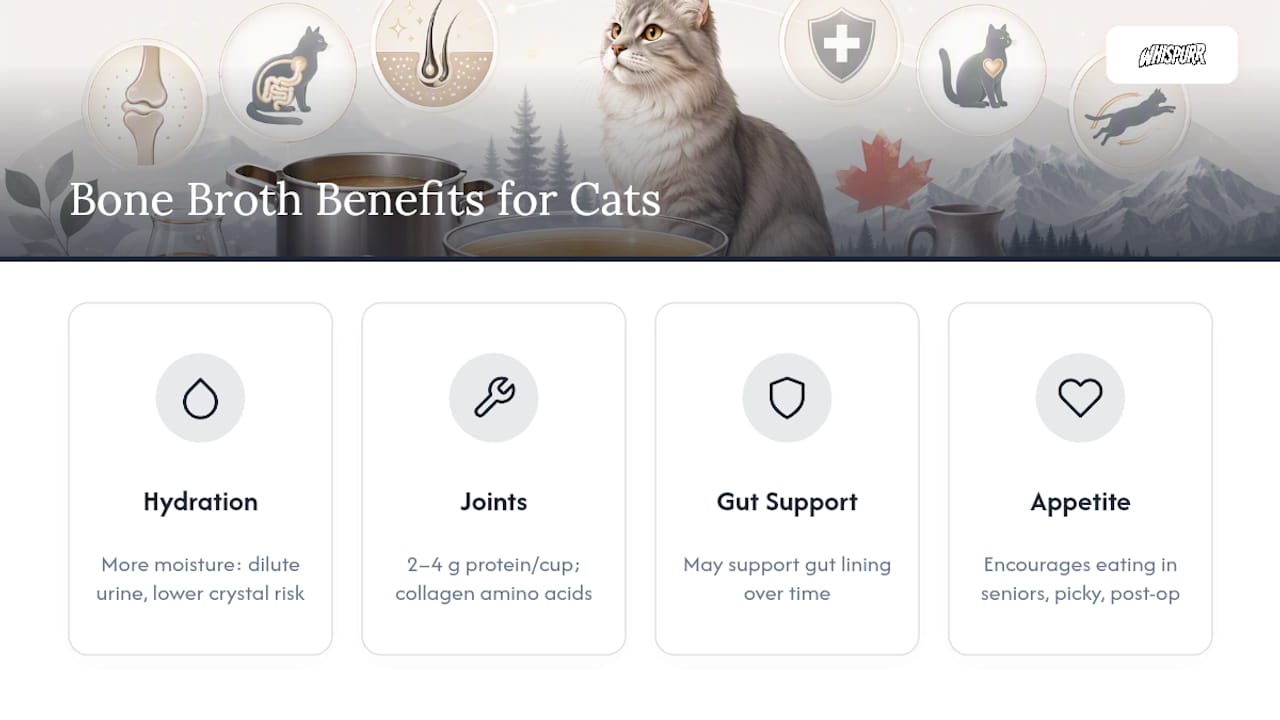
Cats are famously bad at drinking enough water on their own, which is a problem when most of their diet is dry kibble. Bone broth fixes that indirectly. Because it's mostly water, adding even a small amount to a meal raises total fluid intake, and research on feline hydration shows that more dietary moisture produces more dilute urine and lower urinary crystal risk. That matters for a species prone to urinary blockages and kidney strain later in life.
Bone broth for cats typically delivers 2 to 4 grams of protein per cup, alongside gelatin, glycine, and proline released as bones simmer for hours. These compounds are the building blocks of collagen, and while broth isn't a joint supplement in the way glucosamine chews are, pet-health explainers note it may support joint tissue and the gut lining over time, particularly in cats already eating a protein-forward diet.
Where this shows up in real life: a senior cat with mild arthritis who eats less because chewing dry food bothers her stiff jaw. A picky eater who turns his nose up at every food change you try. A cat recovering from surgery who has zero appetite but needs calories and fluids fast. In all three cases, warm broth poured over food (or offered plain) tends to get eaten when nothing else will.
Bone Broth Safety Rules Every Cat Owner Should Know
Two ingredients turn a helpful broth into a genuine hazard, and neither one is optional to avoid.
The first is anything from the allium family. Onion, garlic, chives, and leeks are all listed by the ASPCA as toxic to cats, and it doesn't take much. A splash of broth simmered with a diced onion for human soup can damage a cat's red blood cells over repeated exposure. This is exactly why store-bought and restaurant bone broths are off the table unless you've read the ingredient label yourself.
The second hazard is the bone itself, once cooked. Raw bones soften as they simmer, but cooked bone fragments become brittle and can splinter, creating a choking or intestinal puncture risk. That's why straining is not optional.
Safety checklist before you serve any batch:
- No onion, garlic, chives, or leeks, ever, in any form
- No salt, pepper, or bouillon cubes (bouillon is loaded with sodium and often contains onion powder)
- Strain the broth twice through a fine mesh sieve or cheesecloth to remove every bone fragment
- Skim the fat layer off the top before serving, since too much fat can trigger GI upset or pancreatitis flare-ups in sensitive cats
- Introduce a new batch slowly and watch for loose stool, vomiting, or itching over the next 24 hours
Pro Tip: Keep a small notebook or phone note of exactly what bones and vegetables went into each batch. If your cat ever has a reaction, you'll be able to tell your vet precisely what was in it instead of guessing.
How to Make Bone Broth for Cats at Home
This cat bone broth recipe follows the same logic as the method recommended by Hopewell Animal Hospital: keep it simple, cook it long, and strain it thoroughly.
What you need:
- 2 to 3 pounds of raw bones (chicken backs, necks, or feet, turkey necks, or beef knuckle bones)
- Enough filtered water to cover the bones by an inch
- 1 to 2 tablespoons of apple cider vinegar (helps draw minerals out of the bone)
- No salt, no onion, no garlic, no seasoning of any kind
Steps:
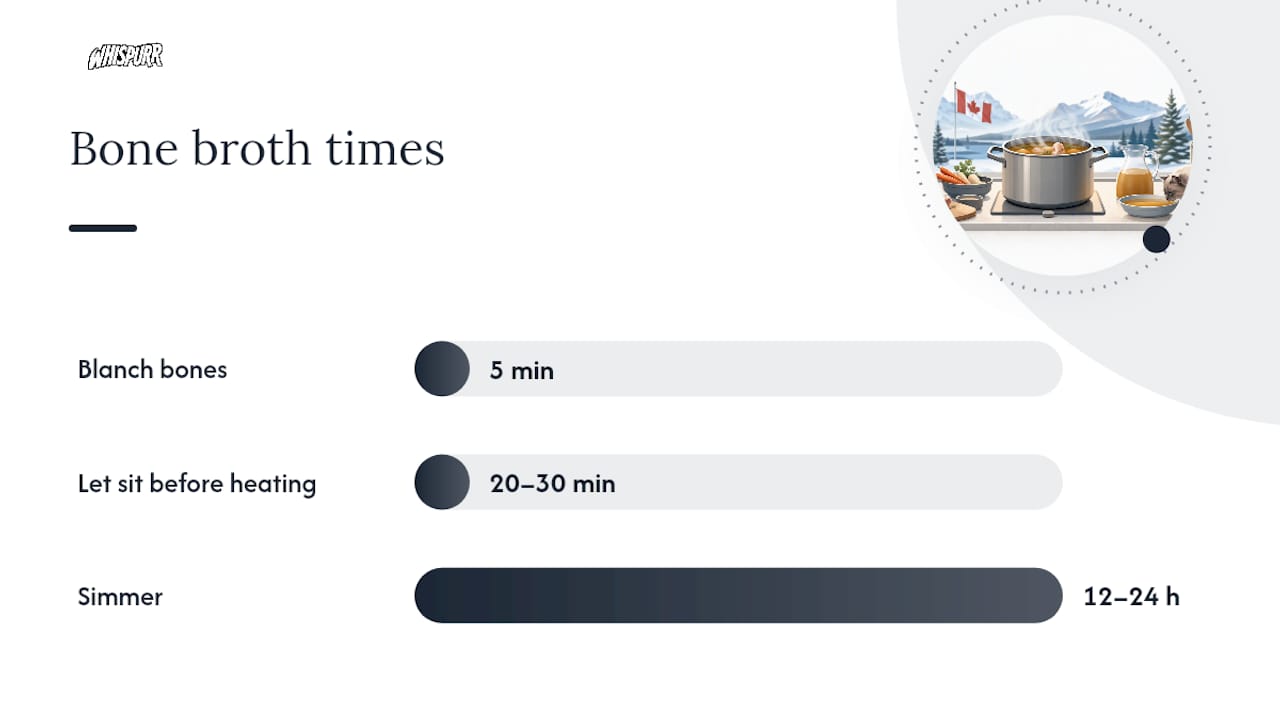
- Optional: blanch the bones in boiling water for 5 minutes, then drain and rinse. This removes surface impurities and makes for a cleaner-tasting broth.
- Place bones in a slow cooker or stockpot, cover with water, and add the vinegar. Let it sit for 20 to 30 minutes before turning on the heat.
- Simmer on low for 12 to 24 hours. Longer cooking pulls more collagen and minerals out of the bone.
- Strain the liquid through a fine mesh strainer, then strain again through cheesecloth to catch any remaining bone shards.
- Refrigerate until fully cooled, then skim off the solidified fat layer from the top.
- Check for a light gel consistency once chilled. This confirms good collagen content, though a runnier broth is still safe to feed.
Portioning tips:
- Pour cooled broth into ice cube trays for single-serving portions
- Once frozen, transfer cubes to a labeled freezer bag with the date
- Keep a small portion in the fridge for the next few days of use
How Much Bone Broth Should You Give Your Cat?
Start small and watch how your cat's stomach handles it before increasing the amount. Most guides recommend beginning with a teaspoon or two for smaller cats and working up to a tablespoon or two for larger cats, offered as a food topper rather than a meal replacement.
| Cat Size | Starting Portion | Typical Frequency | Storage Window |
|---|---|---|---|
| Small cat | 1 teaspoon | 2 to 3 times per week | Fridge: 3 to 4 days |
| Medium cat | 1 to 2 teaspoons | 2 to 3 times per week | Fridge: 3 to 4 days |
| Large cat (over 12 lbs) | 1 to 2 tablespoons | 2 to 3 times per week | Fridge: few days |
| Any size, frozen portions | Same as above, thawed | As needed | Freezer: 3 to 4 months |
Guides consistently point to 2 to 3 servings per week as the sweet spot for most healthy cats, with daily use reserved for short stretches under veterinary direction, such as during recovery from illness or surgery. Warm refrigerated or frozen broth to room temperature or slightly warm before serving. Cold broth straight from the fridge is less appealing, and lukewarm broth mimics the temperature of fresh prey, which can help coax a reluctant eater. Never microwave broth in a way that creates hot spots. Stir and test the temperature on your wrist first.
When to Check With Your Vet Before Adding Bone Broth
Bone broth isn't right for every cat, and a few conditions call for a conversation with your veterinarian before you start. Cats with late-stage kidney disease need carefully controlled phosphorus and protein intake, and broth's mineral content can complicate that balance. Cats with pancreatitis history should avoid the fat content in broth, even after skimming. Any cat with active vomiting, diarrhea, or a known protein allergy needs a vet's input first, since bone broth introduces a new protein source.
Watch for these red flags in the 24 to 48 hours after a new batch:
- Loose stool or diarrhea
- Vomiting or reduced appetite
- Lethargy or unusual hiding
- Increased thirst or changes in litter box habits
If something comes up, tell your vet exactly which bones you used, how much broth you served, and when. That detail turns a vague "my cat seems off" into information your vet can actually act on.
What Whispurr Thinks About Bone Broth vs. Ready-Made Hydration
Homemade broth is worth the effort for owners who have the time to simmer bones for a day and strain them twice. Not everyone does. Travel schedules, long workdays, and cats who won't touch anything that smells "off" from yesterday's batch all make daily broth prep unrealistic.
That's where a shelf-stable, rehydrated meal fills a real gap. Freeze-dried meals that only need water added deliver consistent moisture and nutrition without the multi-day cook time, and they travel without refrigeration. The two approaches aren't competitors. Plenty of owners use broth as an occasional topper on nights they have time to make it, and lean on a complete rehydrated meal the rest of the week for dependable nutrition.
— Zackary
A Convenient Option When Broth Isn't Practical
If simmering bones for 12 hours isn't happening on a Tuesday night, Whispurr offers a shelf-stable route to the same goal: getting real, high-protein nutrition and moisture into your cat without the wait. Each meal uses single-source proteins like wild salmon, duck, turkey, whitefish, trout, or rabbit, and rehydrates with just water in minutes.
- Does not require refrigeration before preparation
- Made with high-protein ingredients without fillers
- Quick and convenient preparation for busy schedules or picky eaters
- A portion of proceeds is donated to support cat shelters
This isn't a replacement for talking to your vet about your cat's specific needs, but it's a practical option for the nights when homemade broth isn't in the cards. Check out the full Whispurr lineup to see which protein your cat might go for first.
Sources
- ASPCA — Cats and plants (animal poison control list)
- Easy DIY Bone Broth Recipe for Cats — Hopewell Animal Hospital
- Bone Broth for Cats: Benefits & How To Feed It To Your Feline — TheyNeedVet
- Bone Broth For Cats Recipe: Easy, Safe & Vet-Approved Guide — FelinaCareHub
FAQ
Is It Okay to Give Cats Bone Broth?
Yes, plain, unseasoned bone broth made without onion, garlic, or salt is generally safe for healthy cats as an occasional hydration and flavor boost. Cats with kidney disease, pancreatitis, or a known protein allergy should only get broth after a vet gives the go-ahead.
How Much Bone Broth Can a Cat Have a Day?
Most healthy cats do fine with 1 to 2 teaspoons for smaller cats up to 1 to 2 tablespoons for larger cats, offered 2 to 3 times per week rather than daily. Daily servings are usually reserved for short-term use, like appetite recovery after illness, and should be guided by your vet.
What Is the Downside of Bone Broth for Cats?
The main risks come from what's in the broth, not the broth itself: onion or garlic seasoning is toxic, cooked bone fragments can splinter and injure the gut, and excess fat or sodium can trigger stomach upset or worsen conditions like pancreatitis. Homemade, properly strained broth avoids nearly all of these risks.
What Bone Broth Can I Feed My Cat?
Feed only homemade broth made from raw bones like chicken backs, turkey necks, or beef knuckles, simmered plain and strained twice to remove all solids. Skip store-bought broths unless you've personally verified the ingredient label has no onion, garlic, or added salt.
Can Bone Broth Replace My Cat's Regular Food?
No, bone broth is a supplement, not a complete meal, since it lacks the full range of nutrients cats need daily. For a shelf-stable option that provides complete nutrition with minimal prep, a rehydrated meal like Whispurr works alongside or instead of homemade broth, depending on your schedule.