
The American Animal Hospital Association backs this gradual approach, and it's the same logic behind freeze-dried formats like Whispurr, where portion control makes exact ratios easy to hit. Rushing the swap risks vomiting, diarrhea, or a cat who simply refuses to eat.
TL;DR:
- Most cats adjust comfortably within 7 to 10 days using a gradual 25% increase schedule; longer, up to 40 days, may be necessary for sensitive or long-term diets.
- Slow transitions help avoid gastrointestinal issues by allowing the gut bacteria to adapt gradually to new proteins and fiber sources, preventing vomiting and loose stool.
- Timing the switch during a calm period and not combining it with stressful events or new pets reduces the risk of food aversion or refusal.
- Careful measurement of food ratios and maintaining consistency in feeding routines improve the success rate of transitioning diets.
- Immediate veterinary consultation is essential if a cat experiences persistent vomiting, diarrhea, refusal to eat, or shows blood in stool or vomit during the switch.
Table of Contents
- Why You Might Need to Change Your Cat's Food Now
- Step-by-Step Mixing Schedule and Slower Alternatives
- Monitoring Checklist: What's Normal, What's a Red Flag
- Switching Between Wet and Dry Food and Managing Texture Changes
- Adapting the Plan for Kittens, Seniors, and Multi-Cat Homes
- Practical Ways to Improve Acceptance Without Undermining Nutrition
- Why Whispurr's Format Can Help a Careful Transition
- How to Store New Food Properly to Maintain Freshness
- A Final Word on Getting This Right
- Make the Mixing Schedule Easier With Whispurr
- Sources
- FAQ
Why You Might Need to Change Your Cat's Food Now
Cats age out of formulas the way kids age out of shoe sizes. A kitten needs calorie-dense food to fuel rapid growth, but that same formula becomes excessive once your cat hits adulthood, usually around 12 months for most breeds, though larger breeds like Maine Coons can take closer to 18 months to finish growing. Senior cats, generally seven and up, often need adjusted protein and fat levels to match a slower metabolism and changing kidney function.
Health issues drive a lot of food changes too. A vet might recommend a switch for weight management, a suspected allergy, or a sensitive stomach that isn't tolerating the current formula well. Sometimes the decision isn't yours at all: a manufacturer discontinues a product, or a recall forces your hand overnight.
Whatever the reason, some situations call for a phone call before you touch the food bowl:
- Your cat has a diagnosed chronic condition like kidney disease, diabetes, or inflammatory bowel disease.
- Your cat is currently on a prescription diet.
- You suspect a food allergy and want to try an elimination approach.
- Your cat is pregnant, nursing, or under six months old.
- Your cat has lost weight unexpectedly or has stopped eating altogether.
For everyone else, a straightforward transition plan handles the job. But it helps to know why you're switching before you start, because the reason often determines how cautious you need to be. A cat moving from one adult formula to another for taste variety can usually follow the standard timeline. A cat moving off a prescription renal diet needs a vet involved at every step, not just at the start.
One thing worth flagging: try not to stack a food change on top of a move, a new pet, or houseguests. Cats can develop food aversion when a diet change coincides with a stressful event, associating the new smell or taste with the anxiety of everything else happening around them. If you can time the switch for a calm stretch, do it.
Step-by-Step Mixing Schedule and Slower Alternatives
Here's what it looks like in practice:
- Days 1 and 2: Mix 75% old food with 25% new food.
- Days 3 and 4: Move to a 50/50 blend.
- Days 5 and 6: Shift to 25% old food and 75% new food.
- Day 7 and beyond: Serve 100% new food, assuming no signs of trouble.
This exact ratio breakdown comes from PetSmart's veterinary-sourced feeding guidance, and it works for most healthy adult cats switching between comparable formulas.
Pro Tip: Mix each portion fresh at every meal rather than pre-blending a day's worth in advance. Wet food separates and dry kibble settles, so a batch mixed in the morning won't have the same ratio by dinnertime.
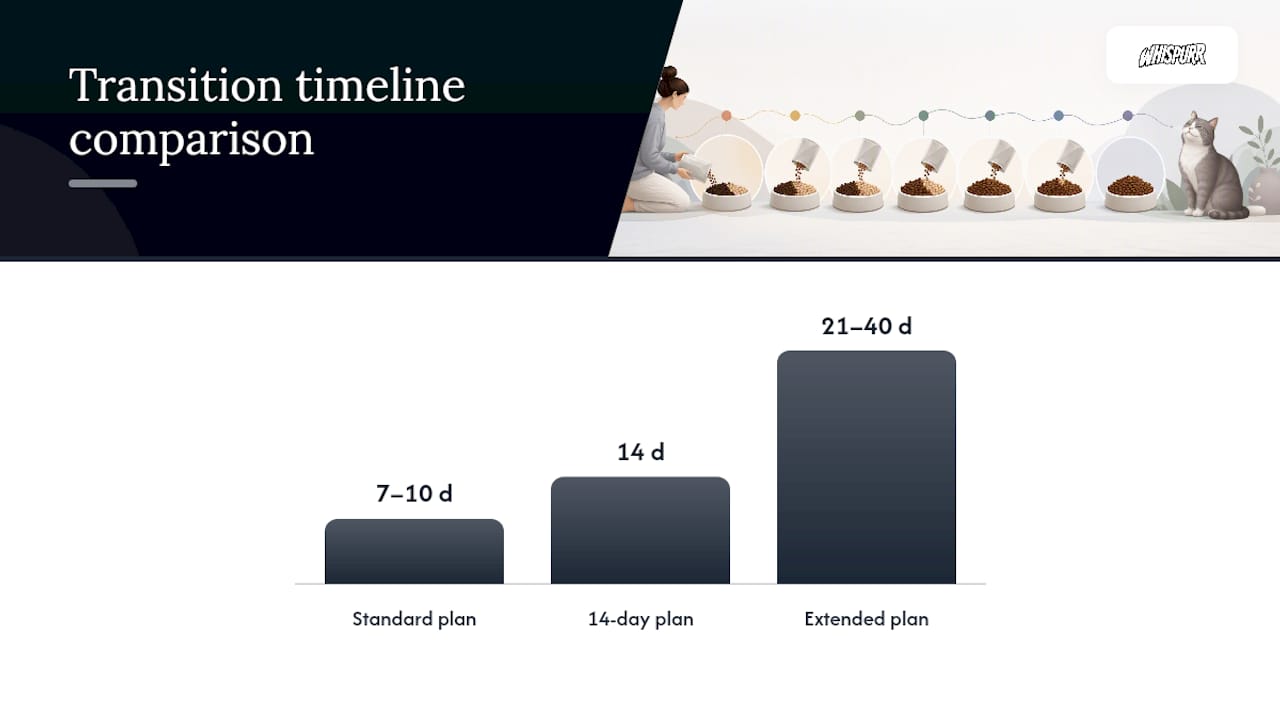
Not every cat cooperates with a 7-day plan, and that's normal. Some cats need up to 40 days to fully adjust to a new diet, particularly if they've eaten the same formula for years or have a sensitive digestive system. If your cat is showing mild resistance on the standard schedule, two slower alternatives work well:
The 14-day plan simply doubles the standard schedule, holding each ratio for four days instead of two. This gives a cat's gut bacteria more time to adjust to the new protein and fiber sources before the next increase.
The 21 to 40 day extended plan is for cats that have eaten one food for years, kittens transitioning off formula, or cats recovering from illness. Start at 10% new food and increase by roughly 5 to 10% every three to four days, watching stool consistency closely at each step before moving forward.
The mechanism behind why slow works isn't just about taste preference. A cat's gut hosts a population of bacteria specifically adapted to digest its current diet efficiently. Switching too abruptly disrupts that bacterial balance, which is why sudden changes so often produce loose stool or vomiting even when the new food is objectively high quality.
A few practical habits make any schedule work better. Measure both old and new food with the same scoop or scale every time. Level, eyeballed measurements drift over a week and throw off your ratios more than you'd expect. Mix thoroughly rather than layering new food on top of old, since a cat that picks around the new stuff isn't actually transitioning at all.
Keep everything else consistent during the process: same feeding times, same bowl, same location. Stability in the surrounding routine reduces the odds that your cat associates the new food with disruption rather than mealtime. And always have fresh water available, especially as moisture content in the diet shifts.
Monitoring Checklist: What's Normal, What's a Red Flag
A little digestive noise during the first two or three days is common and usually not a reason to panic. Slightly softer stool, mild gas, or a cat sniffing the bowl longer than usual before eating all fall into the "give it another day" category. What crosses into concerning territory is persistence and severity.
Contact your veterinarian if you see persistent vomiting or diarrhea, a loss of appetite lasting more than 24 hours, blood in vomit or stool, or signs of dehydration like sunken eyes or lethargy. These aren't "wait and see" symptoms. A single episode of soft stool on day two is different from three days of diarrhea, and the timeline matters as much as the symptom itself.
Here's how to respond to what you're seeing:
- Mild softening of stool, no other symptoms: Hold at the current ratio for an extra two days before increasing.
- Occasional vomiting once, cat still eating normally: Slow your increments, moving up by smaller amounts (10% instead of 25%).
- Cat refuses to eat the mixed food entirely: Go back to the previous ratio that worked, wait a few days, then try a smaller increase.
- Persistent GI symptoms past 24 to 48 hours: Return to 100% of the old food and call your vet before trying again.
- Any blood, repeated vomiting, or visible dehydration: Skip the wait-and-see approach and get veterinary care same day.
Keeping a simple log makes these decisions easier because you're comparing data instead of memory. Track four things daily: appetite (finished the bowl, left some, refused), stool consistency (firm, soft, liquid), energy level (normal, low, lethargic), and weight if you're checking weekly. A notes app or a sheet taped to the pantry door works fine. You don't need anything elaborate, just enough to spot a pattern instead of reacting to a single bad day.
Pro Tip: Photograph the litter box output for the first week if you're unsure whether stool consistency is improving or worsening. A quick photo comparison beats trying to remember what "slightly softer" looked like three days ago.
Switching Between Wet and Dry Food and Managing Texture Changes
Moving from dry to wet, or wet to dry, involves more than just a ratio. Wet food carries far more moisture, which means your cat gets more hydration from the meal itself but also different satiety cues. Cats fed primarily dry food often eat by volume out of habit, so when you introduce wet food, they may initially undereat or overeat before adjusting to how quickly it fills them up.
Calorie density differs meaningfully between formats, and a cup-for-cup swap isn't accurate. Check the calorie content per serving on both packages and adjust portions accordingly rather than assuming equal volume means equal nutrition. This matters most for cats with a target weight or an underlying health condition where calorie tracking counts.
Texture is the other hurdle. A cat used to crunchy kibble may treat a smooth pâté with real suspicion, and the reverse is just as common. A few tactics help ease that adjustment:
- Warm wet food slightly (10 to 15 seconds in the microwave, stirred and tested for hotspots) to boost aroma and mimic fresh prey temperature.
- Add a small amount of water or unsalted, onion-free broth to dry kibble to soften texture gradually if you're moving toward wet food.
- Try a shredded or minced texture before committing to pâté if your cat seems put off by smooth consistency.
- Wash bowls thoroughly between meals, since lingering scent from old food can create an aversion to the bowl itself rather than the food.
- Offer both textures side by side in the early days so your cat can choose without pressure.
Keep fresh water within easy reach even when you're increasing wet food, since some cats reduce their overall water intake once meals get more moisture from food and don't compensate by drinking as much. It's a small thing that's easy to overlook mid-transition.
Adapting the Plan for Kittens, Seniors, and Multi-Cat Homes
A one-size schedule doesn't fit every household, and the standard 7 to 10 day plan needs adjusting for cats at either end of the age spectrum or living in group settings.
Kittens typically start transitioning off kitten formula toward adult food around 12 months, though this varies by breed. Larger breeds, Maine Coons and Ragdolls especially, mature more slowly and may not be ready for adult food until 15 to 18 months. Watch growth and body condition rather than the calendar alone, and don't rush a kitten off a nutrient-dense formula just because a birthday passed.
Senior cats and cats with medical sensitivities need a vet consulted before you start, full stop. Kidney disease, diabetes, and hyperthyroidism are common in older cats and all affect how a diet change should be handled. When you do begin, use smaller increments than the standard 25% jumps and hold each stage longer, sometimes a full week instead of two days, watching closely for any change in water intake, litter box habits, or energy.
Multi-cat households add a logistics problem on top of the nutritional one. If your cats share a feeding area, you can't just put down two bowls with different ratios and expect them to stay in their own lane. Cats swap bowls, especially if one food smells more appealing than the other.
A few things make multi-cat transitions manageable:
- Feed cats in separate rooms or crates during the transition window so ratios stay accurate per cat.
- Stagger transitions if one cat has a sensitive stomach and another doesn't, rather than forcing both onto the same timeline.
- Use a micro-schedule, checking in every two to three days per cat instead of assuming a household-wide pace works for everyone.
- Watch for resource guarding if one food becomes more desirable, since competitive eating can mask which cat is actually undereating.
Households with three or more cats often find it easier to stagger transitions entirely, finishing one cat's switch before starting the next, rather than running multiple schedules in parallel.
Practical Ways to Improve Acceptance Without Undermining Nutrition
A cat turning up its nose at new food isn't necessarily rejecting the recipe. Often it's temperature, texture, or simply unfamiliarity. Warming food to just above room temperature releases more aroma and tends to increase interest, since cats rely heavily on smell to decide whether something's worth eating.
A splash of low-sodium, onion-free broth or a small amount of tuna water can make a new formula more appealing without changing the nutritional profile much. Playing with your cat for five or ten minutes before mealtime can also help, since a little activity naturally increases appetite the way a walk sharpens hunger in people.
Toppers can bridge a stubborn transition, but treat them as a temporary bridge, not a permanent fix. If you're using a sprinkle of freeze-dried topper to get a picky eater interested, have a plan to taper it off over a week or two rather than making it a permanent crutch that masks whether the cat actually accepts the base food.
- Warm food slightly before serving to boost aroma.
- Use a small amount of broth or tuna water, not a flavor packet loaded with sodium.
- Schedule brief play sessions before meals to stimulate appetite.
- Taper toppers gradually instead of relying on them indefinitely.
Watch treat and human food intake during this period too. It's tempting to offer extra treats when a cat is picky, but that undercuts the whole point of the transition by filling them up on something other than the target food. If your cat consistently rejects a formula even after two weeks of gentle encouragement, that's a signal to try a different protein or texture rather than forcing the issue.
Pro Tip: If your cat eats the new food fine alone but refuses it mixed with the old, try offering both foods in separate small piles on the same plate instead of blended together. Some cats object to mixed textures more than mixed flavors.
Why Whispurr's Format Can Help a Careful Transition
One freeze-dried cat food brand offers meals made from real, single-source proteins such as wild salmon, duck, turkey, whitefish, trout, and rabbit. Each portion rehydrates by adding water, which gives you a texture that sits somewhere between traditional wet and dry food, often an easier bridge for cats resistant to a hard switch in either direction.
That format has a few practical advantages during a mixing schedule:
- Pre-portioned sticks can make it simple to measure exact amounts for 25%, 50%, or 75% ratios without guessing at scoop sizes.
- Rehydrating with water can let you control final texture, thinner for cats used to wet food, thicker for cats coming from dry kibble.
- The shelf-stable format can mean no refrigeration hassle, so mixing a partial batch for one meal does not need to create waste concerns.
- Single-source proteins can simplify the process if transitioning because of a suspected allergy, since it's clear what is in the bowl.
A percentage of every order from this brand is donated to cat shelters, which does not change the food but may be of interest to buyers.
None of this replaces a vet conversation if your cat's food change is tied to a medical condition. A format that's easy to mix and measure helps with the mechanics of a transition, but a diagnosed sensitivity or chronic illness still needs professional guidance on which protein or formula is appropriate in the first place.
How to Store New Food Properly to Maintain Freshness
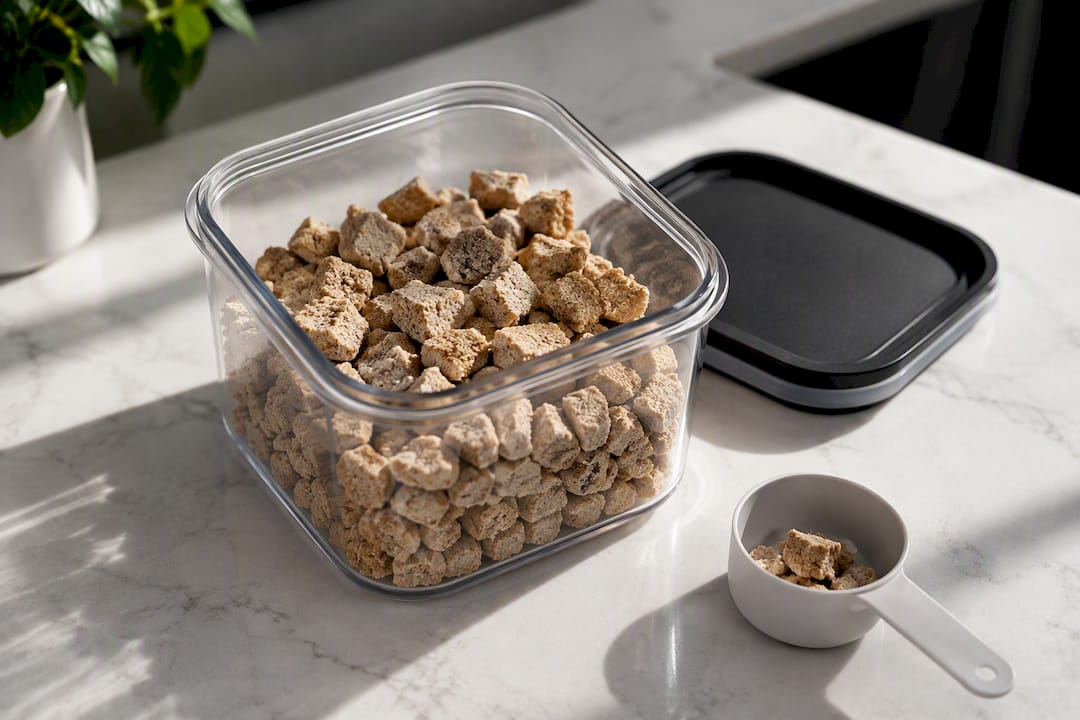
A transition can fail for reasons that have nothing to do with your cat's gut and everything to do with how you're storing the food. Dry kibble left in an opened bag loses aroma and goes stale within a few weeks, and a cat with a sensitive nose will notice before you do. Transfer dry food into an airtight container and keep the original bag inside it if possible, since manufacturers often print feeding guidelines and lot numbers on the packaging you might need later.
Wet food behaves differently once opened. Refrigerate unused portions in a sealed container and use them within two to three days, discarding anything that smells off or has changed texture. Freeze-dried food, once rehydrated, should be treated like wet food and refrigerated promptly if not eaten right away, while the unrehydrated product stays shelf-stable in a cool, dry place until you add water.
Keep any food, new or old, away from direct sunlight and heat sources like a stove or a sunny windowsill, since both accelerate fat oxidation and spoilage. If you're mid-transition and running two bags or containers at once, label them clearly so you're not accidentally grabbing the wrong food for a measured ratio. It sounds minor, but a mixed-up bag is a surprisingly common way transitions get derailed without anyone noticing why.
A Final Word on Getting This Right
Patience is the entire strategy here, not a nice-to-have add-on to it. Every cat adjusts at a different pace, and the plan that works for your neighbor's cat might move too fast for yours. What matters most is watching the actual animal in front of you rather than rigidly following a calendar.
If digestive symptoms persist past 24 to 48 hours, or your cat refuses to eat at all, that's the moment to stop guessing and call your veterinarian.
— Zackary
Make the Mixing Schedule Easier With Whispurr
Following a precise mixing ratio gets harder when you're eyeballing scoops of two different textures every meal.

To use it during a transition, rehydrate the portion you need for that meal, let it sit a few minutes to reach the texture your cat is used to, and blend it into your current ratio with the old food. Because the base ingredients are single-source proteins like wild salmon or rabbit, it also works well if you're switching because of a suspected allergy and want to isolate exactly what your cat is eating. Whispurr isn't the only way to manage a transition, but if measuring consistency and reducing prep hassle are what's slowing you down, it's worth a look. Visit the Whispurr product page to see current flavors and get started.
Sources
The transition timeline and troubleshooting steps in this article draw from established veterinary and pet care guidance:
- Tips and Timelines for Transitioning Your Pet to a New Food
- How to Safely Transition Your Cat to a New Food | PetSmart Learning Center
- How to Switch Your Cat's Foods: 3 Vet Approved Tips & FAQ | The Vet Desk
FAQ
How Long Does It Take a Cat to Adjust to New Food?
Most cats adjust within 7 to 10 days using a gradual 25% increment schedule, but sensitive cats or those switching from a long-standing formula may need up to 40 days. The right pace depends on your individual cat's digestion and how strongly they're attached to their current food.
What Is the 3-3-3 Rule for New Cats?
The 3-3-3 rule refers to a general adjustment timeline for cats in a new home, not specifically a food transition schedule: roughly 3 days to decompress, 3 weeks to settle in, and 3 months to feel fully at home. It's a helpful mindset for patience, but the food-specific timeline to follow is the 7 to 10 day mixing schedule.
What Happens if I Switch My Cat's Food Too Quickly?
Switching too fast most often causes digestive upset, including vomiting, diarrhea, or a refusal to eat the unfamiliar food. This happens because a cat's gut bacteria are adapted to the current diet and need time to adjust to new ingredients and protein sources.
What Is the Best Way to Transition My Cat to New Food?
The most reliable method mixes 25% new food with 75% old food for two days, then increases in 25% steps every two days until you reach 100% new food by day 7 to 10. Pre-portioned formats like Whispurr's freeze-dried sticks can make hitting those exact ratios simpler, since you're counting measured portions instead of estimating scoops.
When Should I Call a Vet During a Food Transition?
Call your veterinarian if your cat shows persistent vomiting or diarrhea, refuses to eat for more than 24 hours, or shows blood in vomit or stool. Mild, short-lived symptoms in the first few days are common, but anything severe or lasting beyond a day or two needs professional attention.